Written by Cheyenne Taylor
September may have “fall” on the calendar, but here in Alabama, our trees can still be dealing with plenty of heat.
After months of high temperatures, summer storms, and periods of heavy rain or drought, September is a good time to take a closer look at your trees. Some of the problems that developed during summer don’t become obvious until weeks or even months later.
A little attention now can help you spot stress early and prepare your trees for the cooler months ahead.
Look for Signs of Summer Stress
Trees don’t always show stress immediately.
By September, you may begin noticing yellowing leaves, browning around leaf edges, thinning canopies, premature leaf drop, or branches that simply don’t look as healthy as they did earlier in the year.
Some seasonal leaf changes are completely normal. Others can indicate problems involving water, roots, insects, disease, or overall tree health.
The important thing is knowing the difference.
Don’t Put Away the Water Hose Yet
One of the biggest mistakes homeowners make is assuming trees no longer need supplemental water because summer is ending.
September in Alabama is still hot and dry.
Newly planted trees are especially vulnerable because their root systems haven’t had enough time to become fully established. During dry periods, slow, deep watering is much more beneficial than frequently wetting only the surface of the soil.
Mature trees can also become drought stressed, particularly when they’re growing in compacted soil, restricted root zones, or areas that have experienced construction or other disturbances.
Take a Look Up — and Down
Most people look at the canopy when they’re worried about a tree, but some of the most important clues are closer to the ground.
Look around the trunk and root flare.
Has soil or mulch been piled against the trunk? Are roots damaged or exposed? Has construction, equipment, or vehicle traffic compacted the soil around the tree?
Then look up.
Dead branches, hanging limbs, cracks, cavities, or other changes in the canopy can warrant a closer inspection — especially after a summer of Alabama thunderstorms.
Watch for Insects and Disease
What are those big webs in the trees?
If you’ve noticed these around lately, you’re looking at fall webworms.
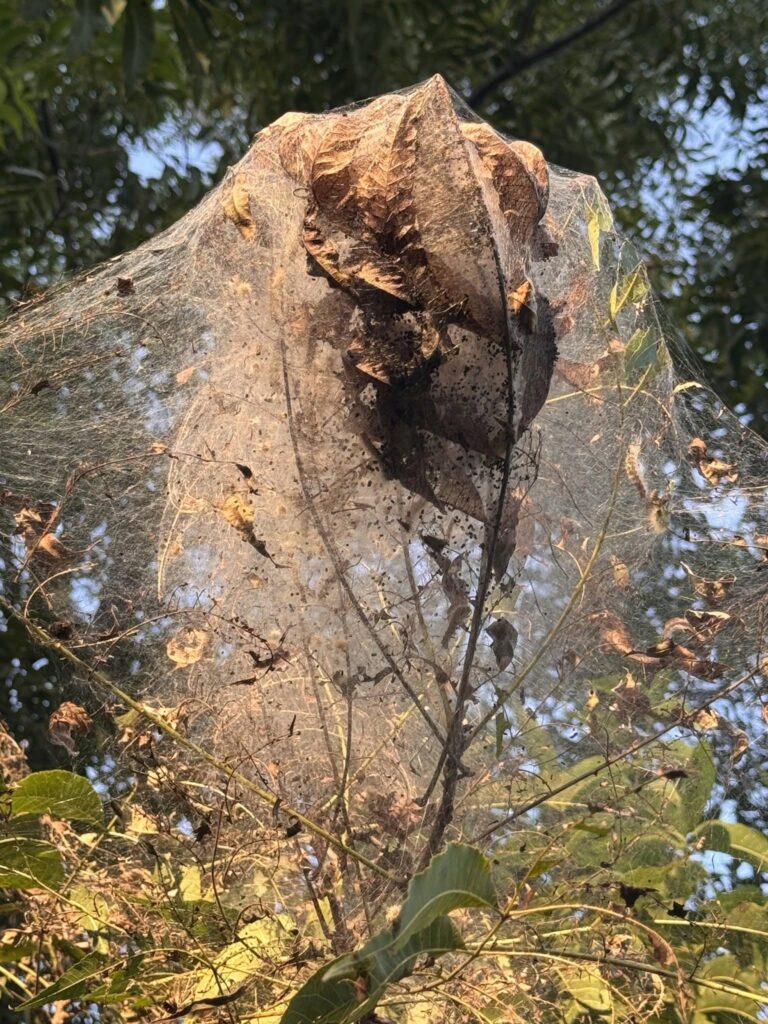
They build their webs around the leaves at the ends of branches and stay inside feeding on the foliage. As they grow, so does the web — which is why some of them can get huge.
The good news: they look a lot scarier than they actually are. A healthy, mature tree can typically handle the feeding without any long-term problems.
You’ll commonly see them in late summer and early fall, and pecans are one of their favorite trees.
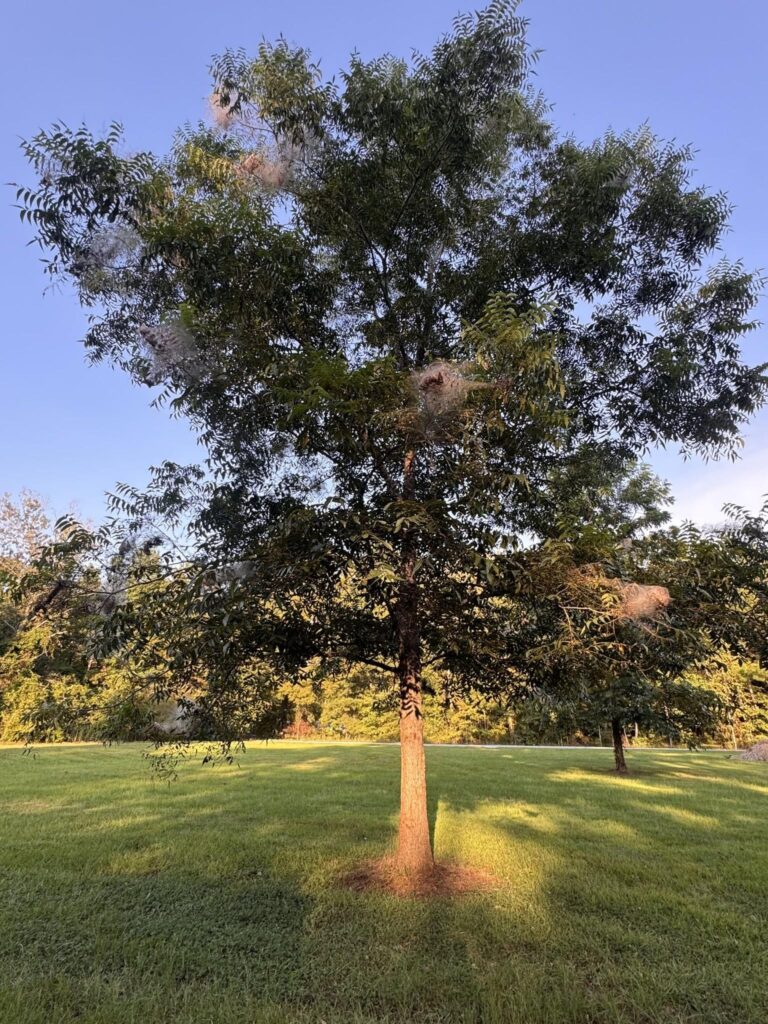
So if you spot what looks like a giant spider web taking over part of your tree, now you know what’s actually living in there.
Not sure whether what you’re seeing is normal seasonal change or a sign of a real problem? Our ISA Certified Arborists evaluate the whole tree — canopy, trunk, root flare, and soil — before recommending any work. Request an arborist evaluation or call us at 334-657-6274.